

US Border Logistics Briefing - October 22, 2026
Prepared 6:00 AM PDT
Border conditions are comparatively quiet on the crossing feed this morning, but that silence is itself operationally meaningful: CBP/CBSA shows no active wait-time data in the last two hours, so there is no current lane-level congestion signal to anchor dispatch decisions. In that environment, the most actionable items are the weather and policy developments that can affect clearance timing, routing flexibility, and shipment documentation over the next day. The weather picture is mixed but notable, with freezing readings at several northern-border and northeastern locations and a pair of active National Weather Service alerts that could affect higher-profile corridors.
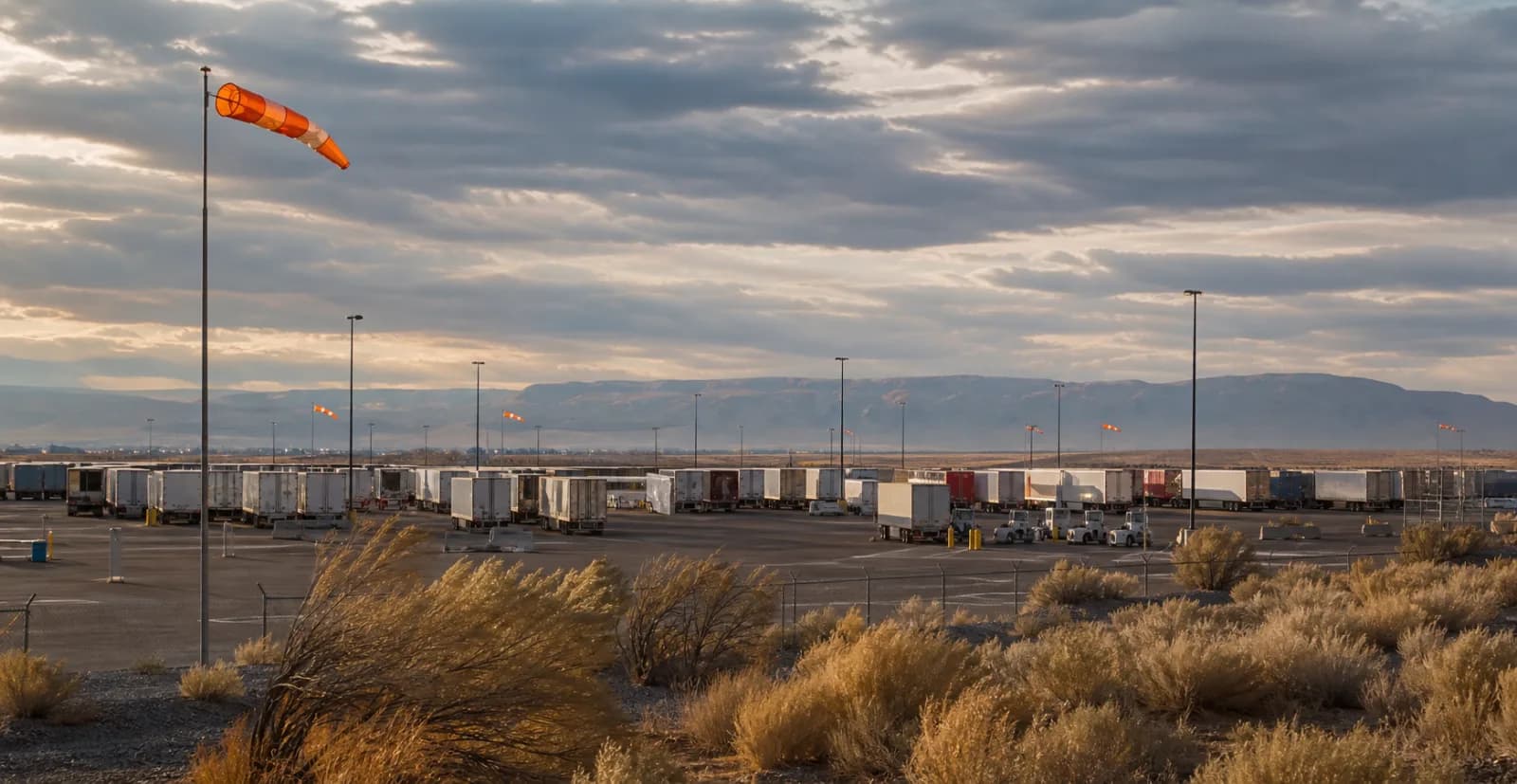
The weather layer matters because it is now the clearest live source of near-term friction in the cross-border operating picture. A High Wind Watch is in effect from this morning through Friday afternoon for the Great Falls, Montana area, while a Dense Fog Advisory is active this morning for the Gaylord, Michigan area. Those alerts do not by themselves quantify border delay, but they do raise the risk of local visibility and handling disruptions around adjacent freight corridors. At the same time, temperatures below freezing are showing up at multiple crossings and airport-adjacent locations, which is consistent with the potential for colder-surface operating conditions even where no wait-time queue has been reported.
Trade policy activity is also dense today, but it remains document-flow context rather than evidence of current operational disruption. Several CBP and trade-agency actions were published or updated on October 22, including CBP’s “Indefinite Suspension of the De Minimis Exemption for Mail Shipments and New Postal Informal Entry Process; Delayed Compliance Extension,” along with a CBP notice modifying the test of the new electronic informal entry process for mail. Those two CBP items are the most directly logistics-relevant in the current packet because they speak to mail and informal-entry handling, but the data provided here is limited to notice-level summaries and explicit claim caveats, so they should be treated as policy context rather than live evidence of implementation impact. Other October 22 trade notices concern continuation or final results in antidumping and countervailing-duty proceedings for oil country tubular goods, welded stainless pressure pipe, and related products; these are important for compliance teams but do not, in the supplied data, indicate any present crossing delay.
Aviation is sparse but clear on one material point: San Diego International Airport is under a closure notice for non-scheduled transient general aviation aircraft, with the advisory stating “!SAN 10/004 SAN AD AP CLSD TO NON SKED TRANSIENT GA ACFT EXC PPR 619-298-7704 2610011633-2701010800.” That restriction is specific to transient GA activity and does not describe a commercial passenger disruption, but it is still relevant for time-sensitive airfreight-adjacent movements and ad hoc aircraft planning. Because the notice is an airport-operational restriction rather than a delay count, it should be read as a routing and acceptance constraint, not a broad airport shutdown.
The weather conditions also deserve a corridor-level read because the cold readings line up with the northern and northeastern border environment. Reported freezing temperatures include BTV at -0.6°C, GFK at -1.1°C, derby_line at -0.2°C, houlton at -1°C, intl_falls at -1.1°C, lacolle_route_221 at -0.2°C, and norton at -0.5°C. These observations do not, on their own, confirm icing or closure, but they do indicate that winter-like surface conditions are already present in several crossing-adjacent locations. In operational terms, that raises the importance of monitoring pavement condition, staging times, and any local advisories that may appear later in the day, especially where the border feed currently lacks wait-time visibility.
Community intelligence is limited in this packet and should be treated only as retired or raw diagnostic context; there are no live claim-bearing community reports here to elevate above the official weather and policy feeds. That means the briefing should stay anchored to observed data: no current wait queue, a clear set of weather alerts, a targeted aviation restriction, and a cluster of trade notices that could matter for document processing but are not yet tied to a measurable border effect.
Macro conditions add a useful backdrop for transport planners, even though they are not a direct cross-border congestion indicator. Energy prices remain elevated in the latest series, with Brent crude at 115.22 on October 20 and WTI at 107.89 on October 20. Diesel remains expensive across the latest readings, including US Diesel Retail at 6.28 on October 19, with regional measures at 5.90, 6.35, and 7.39 for GASDESGCW, GASDESMWW, and GASDESWCW respectively, all as of October 19. On the currency side, the USD/CAD rate stands at 1.4157 and USD/MXN at 18.5026, both as of October 16, while the trade-weighted dollar is 121.40 on the same date. These are not border-delay data, but they matter for landed-cost planning, carrier pricing, and cross-border rate sensitivity. The latest industrial and goods-price readings are dated September 1, with IR at 152.20, PCU484121484121 at 219.38, PCUOMFGOMFG at 287.13, PPIACO at 295.71, and TOTALSA at 16.38. BOPGSTB is listed at -57,347.00 as of February 1, which is much older than the rest of the macro panel and should be treated accordingly.
The practical outlook is therefore restrained but not static. With no active border wait-time data in the last two hours, there is no evidence in this packet of immediate queue pressure at the crossings themselves. The higher-probability operational watchpoints are weather-sensitive northern routes, the ongoing morning fog advisory in Michigan, the wind watch in Montana, and any follow-on notices that could emerge from the CBP mail-entry and de minimis policy changes. The most important near-term question is not whether there is congestion now, but whether the current weather and policy environment begins to show up in cleared volumes or localized handling delays later today.
Watch list for the next cycle:
- Any return of active wait-time feeds, especially at northern-border and Great Lakes-adjacent crossings.
- Updates to the High Wind Watch and Dense Fog Advisory, including extension, downgrade, or expansion.
- Follow-on CBP guidance on the delayed compliance extension and the modified electronic informal entry test for mail.
- Any additional airport restrictions affecting cargo or transient aircraft acceptance beyond SAN.
- Fresh temperature or surface-condition updates at BTV, GFK, intl_falls, houlton, lacolle_route_221, and related northern crossings.