

US Border Logistics Briefing - October 15, 2026
Prepared 6:00 AM PDT
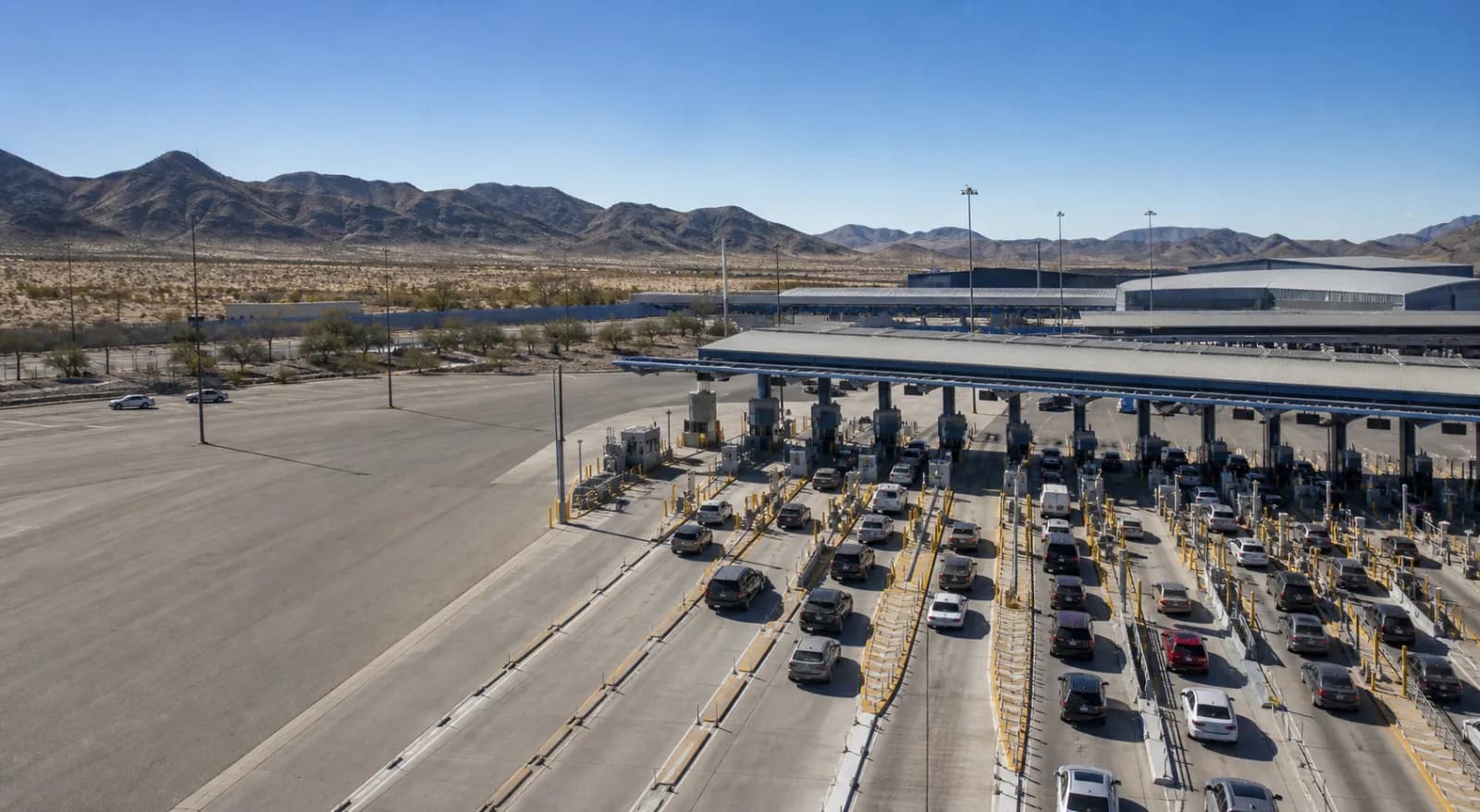
U.S. border-crossing operations are entering the day with no active wait-time feed to anchor lane-level congestion readings, so the operational picture is being driven more by weather, aviation constraints, and broader trade and cost signals than by measured crossing delays. The latest CBP/CBSA pull is fresh, but it reports no active wait time data in the last two hours, which means there is no current corridor-level delay metric to confirm whether friction is building at the ports of entry themselves.
Weather is the most immediate near-border disruptor. High Wind Warnings are in effect for San Diego, El Paso/Santa Teresa, and Tucson, with a High Wind Watch extending across Great Falls. Flood Watch conditions remain in place for Austin/San Antonio, while Seattle is under a Dense Fog Advisory through mid-morning. Taken together, these alerts suggest the day’s highest operational sensitivity sits along the Southwest corridor and, to a lesser extent, in Texas and the Pacific Northwest where visibility or wind can affect approach patterns, staging, and general roadway reliability near key crossings.
Aviation conditions reinforce that caution. San Diego International is closed to non-scheduled transient general aviation aircraft except by prior permission, which matters for any logistics activity relying on ad hoc aircraft movements or repositioning through that airport. The airport notice is not a broader commercial passenger disruption statement, but it does indicate a tightened operating envelope for transient GA into SAN.
On the policy front, today’s document flow is active but should be treated as trade-policy context rather than immediate border-operations evidence. Commerce and the International Trade Commission posted multiple notices dated October 14 and 15, including amended final results tied to court decisions for forged steel fluid end blocks from Italy and wood mouldings and millwork products from China, preliminary or rescission-related actions for steel nails from Oman and pasta from Italy, and an ITC notice of a new investigation involving vertical power delivery systems and related components. The USMCA binational panel also issued a panel decision notice. These items matter for shippers because they can change duty exposure, compliance burden, and sourcing calculations, but the supplied summaries do not provide enough detail to infer immediate border slowdowns or enforcement changes. The court-decision notices explicitly describe amended final results following CIT judgments; beyond that, cause-and-effect on freight flows is not established in the current feed.
The macro backdrop continues to argue for elevated transport cost sensitivity even without a live delay reading at the crossings. Diesel remains expensive across the major series reported: U.S. diesel retail is 6.18 as of 2026-10-12, with regional diesel readings of 5.81 in the Gulf Coast, 6.26 in the Midwest, and 7.24 on the West Coast, all dated 2026-10-12. Crude remains high as well, with Brent at 125.44 and WTI at 96.24 as of 2026-10-06. FX is also relevant for cross-border planning: USD/CAD is 1.4269 and USD/MXN is 18.3990, both dated 2026-10-09, while the trade-weighted dollar stands at 121.60 on the same date. These readings do not explain border conditions by themselves, but they do keep landed-cost and carrier pricing pressure elevated.
Additional macro series point to a still-costly manufacturing and logistics environment. BOPGSTB is reported at -57,347.00 as of 2026-02-01. Industrial and producer-price series are elevated as of 2026-08-01: IR is 150.80, PCU484121484121 is 207.64, PCUOMFGOMFG is 279.70, and PPIACO is 287.93. TOTALSA is 16.38 as of 2026-09-01. The supplied data do not include interpretation or release context, so these are best treated as dated indicators of the pricing environment rather than as direct predictors of today’s port performance.
Community intelligence is limited in this feed and should be treated strictly as retired or raw diagnostic context, not current claim-bearing evidence. No community observations or qualitative port-side reports were supplied with current dates, so there is no additional on-the-ground confirmation to weigh against the official weather and airport notices.
The near-term outlook is therefore shaped by disruption risk around, rather than inside, the border inspection environment. With no active wait-time data to confirm congestion, the practical watch item is whether the Southwest wind warnings and fog conditions translate into slower approaches, airport constraints, or knock-on delays in local trucking and aircraft movements. The lack of lane-level measurements means dispatchers should assume uncertainty rather than confirmed delay, and verify conditions before time-sensitive moves.
Operational watch list:
- Watch San Diego, El Paso/Santa Teresa, and Tucson for wind-related transportation friction.
- Monitor Austin/San Antonio for any flooding-related roadway impacts.
- Check Seattle morning visibility conditions before any northbound or local airport-dependent moves.
- Treat SAN’s transient GA closure notice as a constraint for non-scheduled aviation activity.
- Follow the new trade notices for duty and compliance implications, but not as evidence of current border congestion.