

US Border Logistics Briefing - September 2, 2026
Prepared 6:00 AM PDT
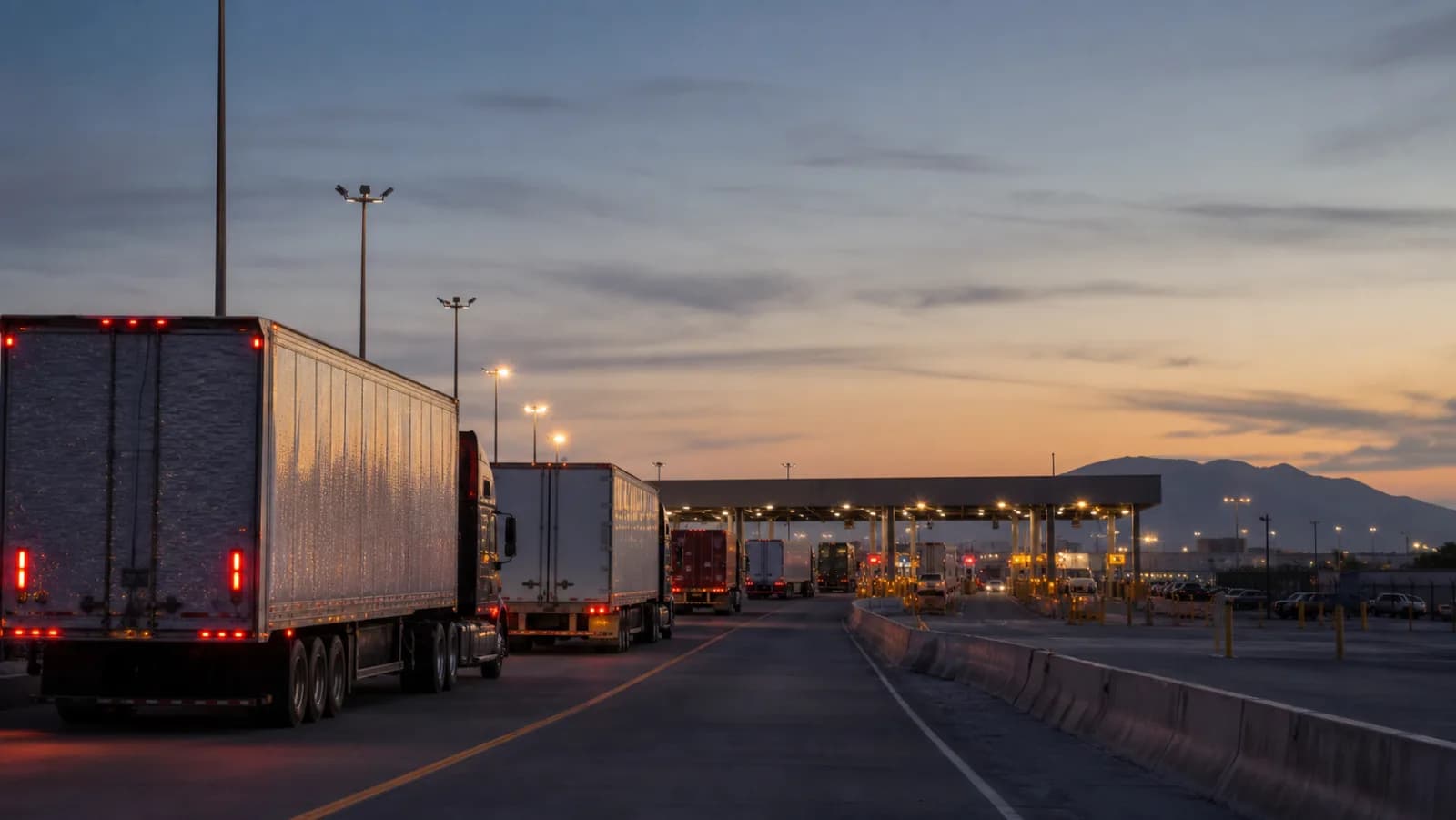
Border conditions are comparatively quiet in the latest pull, but the absence of active wait-time data is itself the operating signal. CBP/CBSA shows no active wait time data in the last two hours, and the source pull is fresh at 14 minutes old, so there is no lane-level congestion to report as current border evidence. That means dispatch attention shifts away from queue management and toward adjacent disruptors that can still affect crossings and inland handoffs: weather, airport performance, and policy developments that may alter compliance workstreams rather than today’s physical flow.
The most immediate operational pressure is weather-driven, not border-queue-driven. Active severe thunderstorm warnings in western New York are the only high-severity alerts in the current set and are time-bound late morning local time. A separate wind advisory is in effect for Seattle through evening Pacific time, while heat advisories remain active in Detroit/Pontiac and Brownsville. None of these alerts are paired here with measured crossing delays, so cause-and-effect should not be assumed; however, they are the conditions most likely to matter if cross-border drayage, airport transfers, or local staging operations intersect affected corridors during the warning windows.
Aviation is also carrying localized friction. Detroit Metro Wayne is reporting general arrival/departure delay information with an average 16-minute delay tied to runway construction, which is the most explicit transportation delay in the feed. San Diego International is under a closure notice for non-scheduled transient GA aircraft except PPR, with the restriction running through October 1. For logistics teams, that makes Detroit a manageable but real time-loss point for passenger and belly-cargo-related movements, while San Diego’s restriction is more of a planning constraint for ad hoc aviation use than a broad commercial airport disruption. In both cases, the data provide an operational condition, not a root cause beyond what is written.
Trade-policy developments are dense today, but they remain claim-caveated source material rather than normalized policy facts. The documents point to continuing U.S. trade-remedy activity across steel, chemicals, packaging, and tariff classification issues, with the explicit warning that these are raw-current policy-document contexts only and should not be treated as legal advice or proof of implemented operational changes. Still, the breadth of notices is meaningful for importers because it signals ongoing administrative churn in classification, scope, and review processes that can affect documentation and landed-cost planning even when the physical border is calm.
Border crossings and lane conditions
There are no current wait-time observations to parse at the lane level. The feed states that no active wait time data were available in the last two hours, so there are no current values for passenger, commercial, FAST, Ready Lane, or any other specific crossing lane to compare. That absence limits today’s ability to describe congestion by port or corridor, but it also reduces the risk of overcalling conditions from stale information. In practical terms, the current picture is one of no confirmed queue stress in the supplied border data, not a declared all-clear for every port.
Because the dataset includes no lane-level figures, readers should avoid using older port memory to infer current performance. The only defensible statement is that the latest pull does not contain active wait measurements. If movement starts to slow later today, the first actionable evidence will likely appear in a refreshed wait feed rather than in the present border snapshot.
Significant 24-hour changes
The 24-hour story is concentrated in weather and policy, not border queues. On the weather side, the feed now includes two severe thunderstorm warnings from NWS Buffalo NY issued at 8:40 a.m. EDT and 8:18 a.m. EDT, both expiring mid-to-late morning. Detroit/Pontiac’s heat advisory and Brownsville’s heat advisory continue into the evening, while Seattle’s wind advisory runs until 8:00 p.m. PDT. These changes matter because they can affect truck dwell, airport turn times, and the timing of cross-border handoffs even when no direct border delay is recorded.
On the policy side, the past seven days include a cluster of U.S. trade notices dated September 1 and September 2. The strongest operational takeaway is not a single tariff shock but the accumulation of review actions and notices spanning steel products, PET resin, ammonium sulfate scope issues, and polyethylene retail carrier bags, alongside a proposed CBP rule on heightened import disclosures for supply chain visibility. The explicit caveat is important: these documents are current policy context only, and the data do not establish implementation timing beyond the stated document dates and summaries.
Trade-policy documents and explicit caveats
Today’s policy set is broad enough to matter to compliance teams, but every item in the feed carries the same limitation: it is raw-current policy-document context, not a fully normalized source of operational fact. The September 2 notices include a Trade Representative notice on conforming amendments to product exclusions tied to China’s acts, policies, and practices related to technology transfer, intellectual property, and innovation; Commerce final sunset-review results on certain steel nails from Vietnam; final expedited second sunset-review results on welded line pipe from Korea and Türkiye; and amended final results for PET resin from Oman. CBP is also considering a proposed rule on heightened import disclosures for supply chain visibility.
September 1 notices add more trade-remedy movement, including an ammonium sulfate scope ruling tied to a court decision, final results for certain steel grating from China, institution of five-year reviews for polyethylene retail carrier bags from multiple countries, an annual invitation to request administrative reviews, and final CVD administrative-review results for certain cold-rolled steel flat products from Korea. The operational implication is a busier documentation and classification environment, not a confirmed same-day border throughput impact. The dataset does not claim customs behavior changes, and none should be inferred.
Aviation and airport conditions
Detroit Metro Wayne is the only airport in the feed with a quantified delay: average arrival/departure delays of 16 minutes, with runway construction identified as the operational constraint. That level of delay is not severe enough to indicate systemic airport failure, but it is enough to disrupt tightly scheduled cargo and passenger connections, especially where cross-border moves rely on same-day air handoffs.
San Diego International has a closure notice affecting non-scheduled transient GA aircraft except those with prior permission. Because this is framed as an airport closure condition for a specific class of aircraft rather than a commercial passenger delay metric, it should be treated as a planning restriction. It may matter for specialist logistics and emergency or ad hoc aviation use, but it is not evidence of broader cargo-network congestion.
Weather alerts and notable crossing conditions
The weather picture is mixed and localized. Buffalo’s two severe thunderstorm warnings are the most acute alerts in the feed and may affect nearby surface movement windows while they remain active. Seattle’s wind advisory could matter for port/airport interfaces and exposed road segments, but the dataset provides no direct border consequence. The Detroit heat advisory and Brownsville heat advisory are more likely to influence driver endurance, equipment performance, and dwell planning than to create immediate queue formation on their own.
There are no specific crossing-condition reports attached to these alerts in the current feed. The correct read is simply that weather is the dominant near-term hazard class today, while the border wait feed itself is currently blank.
Community intelligence context
No community intelligence rows were supplied in this pull. As a result, there is no retired or raw diagnostic context to incorporate, and no live claim-bearing use should be made of any unverified anecdotal source even if it appears in other channels. The current report therefore rests only on the provided border, weather, airport, policy, and macro data.
Macro and economic indicators
The macro backdrop remains mixed and should be read with observation dates attached. The trade-weighted dollar stands at 118.75 as of 2026-08-28, with USD/CAD at 1.3895 and USD/MXN at 17.0430 on the same date. Those exchange levels remain relevant for cross-border landed-cost planning, especially where margins are sensitive to currency swings.
Energy and freight-cost inputs remain elevated. Brent crude is 88.24 and WTI is 83.90, both as of 2026-08-25. Diesel measures show 5.48 for GASDESGCW as of 2026-08-24, 5.57 for GASDESMWW as of 2026-08-31, 6.41 for GASDESWCW as of 2026-08-24, and US Diesel Retail at 5.65 as of 2026-08-24. These are supportive of cautious cost assumptions for over-the-road movement.
Industrial and trade indicators are older but still directional: BOPGSTB is -57,347.00 as of 2026-02-01; IR is 149.60 as of 2026-07-01; PCU484121484121 is 195.57; PCUOMFGOMFG is 274.28; PPIACO is 284.06; and TOTALSA is 16.76, all as of 2026-07-01. The report should treat these as dated macro context rather than current operational triggers.
Outlook and operational watch list
The immediate outlook is stable at the border, but not friction-free in adjacent systems. With no active wait-time data in the last two hours, the physical crossing picture is unconfirmed rather than congested. The more likely sources of disruption today are localized weather, Detroit aviation delays, and compliance workload associated with the day’s trade notices.
Operationally, the best watch items are:
- renewed CBP/CBSA wait-time posts for any lane-specific congestion;
- the expiration windows of the Buffalo severe thunderstorm warnings and whether nearby corridors are affected;
- continuation or expansion of Detroit Metro Wayne delays tied to runway construction;
- whether the CBP proposed disclosure rule advances beyond notice stage;
- any additional trade-remedy notices that affect steel, chemicals, or packaging classifications.
Absent fresh wait-time evidence, the working assumption should be that today’s border is operationally calm but exposed to weather and documentation friction rather than direct queue pressure.